
At first, plant care can seem like a small task. Water the plants, trim a few leaves, keep everything looking neat, move on with the day. But it has a way of growing into far more work than most people expect. Schedules get inconsistent. Early signs of stress get missed. Pests go unnoticed. Plants decline. Then the client who tried to handle it internally ends up calling a professional after the damage is done.
We see that pattern often.
People want beautiful plants, but they don't always realize how much time, attention, and expertise it takes to keep them healthy long term. The practical answer: proper maintenance requires consistency, environmental awareness, and proactive care.
Here's what plant maintenance actually involves, why DIY care often falls short, and why many people eventually bring in a professional.
What plant maintenance actually includes
Plant maintenance is more than occasional watering. Healthy interior plants need routine care that fits the conditions of the space, including:
- Monitoring light exposure
- Adjusting watering based on plant type and environment
- Watching for HVAC-related stress and temperature shifts
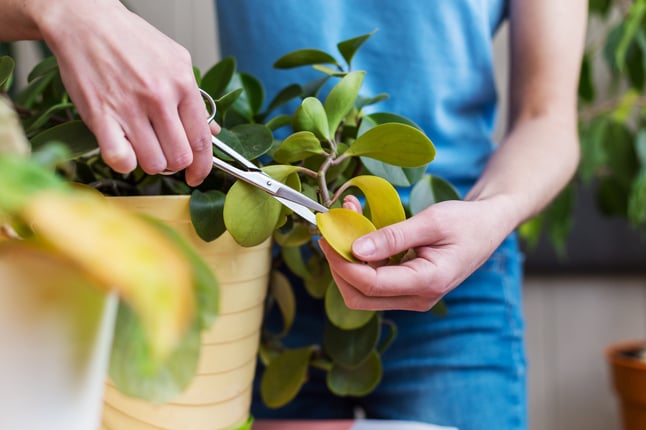
- Pruning damaged or overgrown foliage
- Cleaning leaves and containers
- Checking for pests before they spread
- Rotating plants for balanced growth
- Refreshing struggling plants before the display looks neglected
Handled consistently, plants thrive. Handled inconsistently, the results show.
.jpeg?width=693&height=462&name=AdobeStock_470333204%20(1).jpeg)
The hidden reality of DIY plant care
DIY plant care looks like the affordable option at a glance. Most people assume it just means adding one more task to an already full routine.
The problem: plants need more than occasional attention. What starts as a simple DIY task becomes a recurring distraction that costs more time, effort, and replacement expense than expected.
The most common DIY problems we see:
1. Overwatering and underwatering. This is one of the most common causes of plant decline. Different plants need different schedules, and conditions change from room to room. A plant near a bright lobby window behaves nothing like one in a low-light hallway.
2. Pest issues that go unnoticed. Gnats, spider mites, and scale are easier to manage when caught early. Without regular monitoring, a small issue becomes a larger infestation that spreads across containers.
3. Poor plant placement. A plant can look great on day one and still fail over time. Light, airflow, and foot traffic all matter, and professional design accounts for those variables upfront.
4. Reactive instead of proactive care. Most DIY approaches respond to visible problems. By the time leaves are yellowing or dropping, the plant's already been under stress.
5. It's easy to let slip. Plant care competes with everything else on your plate. A missed watering here, a skipped check there, and small issues become bigger ones before you notice.
.jpeg?width=670&height=447&name=AdobeStock_534993557%20(1).jpeg)
A few tips if you're handling it yourself
- Check soil before you water, not on a schedule. Stick a finger in an inch. If it's still damp, skip it. Overwatering kills more plants than neglect does.
- Match plants to their light before troubleshooting anything else. A plant struggling in low light won't improve no matter how well you water it.
- Check the undersides of leaves, not just the tops. That's where spider mites and scale show up first, often weeks before you'd notice otherwise.
- Rotate pots a quarter turn every few weeks so plants don't grow lopsided toward the light.
Why hiring a professional is the smarter long-term choice
Working with a professional plant partner isn't about avoiding responsibility. It's about protecting your space, your time, and your investment.
Professional maintenance brings structure and consistency to every visit, catching problems before they affect the space instead of reacting after the fact:
- Consistent maintenance: Watering, pruning, cleaning, rotation, and monitoring stay on schedule.
- Early pest detection: Trained technicians know what to look for and catch issues before they spread.
- Better plant health and appearance: Healthy plants support spaces that feel elevated and welcoming.
- Less replacement waste: Protecting the plants you already have instead of repeatedly replacing them.
- Less internal stress: Your team stays focused on their actual job while the space still gets thoughtful care.
A better way to keep plants healthy
The best office plant environments run on more than occasional attention. They're built on expertise, thoughtful design, and maintenance that keeps plants thriving year-round.
If you're spending too much time keeping your plants alive, replacing them, or dealing with pest problems after the fact, let's fix that.
Contact us to schedule a free design consultation.